Home › Blog › What to Do After Water Damage
Published October 18, 2026 — by Cheyenne Water Damage Pros
What to Do When Your Cheyenne Home Has Water Damage
Fast answer: Safety first — shut off power to wet areas and stop the water at its source. Then document everything with photos before you move anything, protect valuables, and call a professional within the hour. The first 60 minutes decide whether this is a manageable cleanup or a major restoration.
Water damage is disorienting. Whether it's a burst pipe at 2 a.m., a water heater that let go, or flooding after a Cheyenne storm, you're dealing with a mess that keeps getting worse while you stand there deciding what to do. This guide is your first-60-minutes checklist — what to do, in what order, and what NOT to do. And if you're already mid-crisis, skip to the bottom: our line is open around the clock, and Cheyenne water damage restoration services start with one call.
Step 1: Stay Safe — Power and Water First
Before you wade in, stop and assess. If water is near electrical outlets, switches, or your breaker panel — do NOT walk through it. Electricity travels through standing water. Shut off power to the affected area at the breaker panel if you can do it safely and dryly; if not, call your power company or an electrician first. Similarly, if sewage is backing up through drains, treat it as a health hazard: do not touch it, and keep children and pets away. Contaminated water needs professional sewage cleanup, not DIY mopping.
Step 2: Stop the Source (If You Can Do It Safely)
If the water is still flowing, stopping it is the single most valuable thing you can do. Once the source is under control, decide whether it is safe for anyone to stay in the home tonight — our guide on staying in a house with water damage walks through water types, electrical risks, and who should leave first.
- Burst pipe or supply line: shut off your home's main water valve. Find it now if you don't know where it is — basement, crawl space, utility closet, or at the meter pit.
- Water heater leak: shut the cold-water inlet valve on the heater, then turn the heater itself to "pilot" or off.
- Appliance supply line (washer, dishwasher, ice maker): shut the small valve behind or beside the appliance.
- Toilet overflowing: turn the valve behind the toilet, then lift the tank lid and push the flapper down.
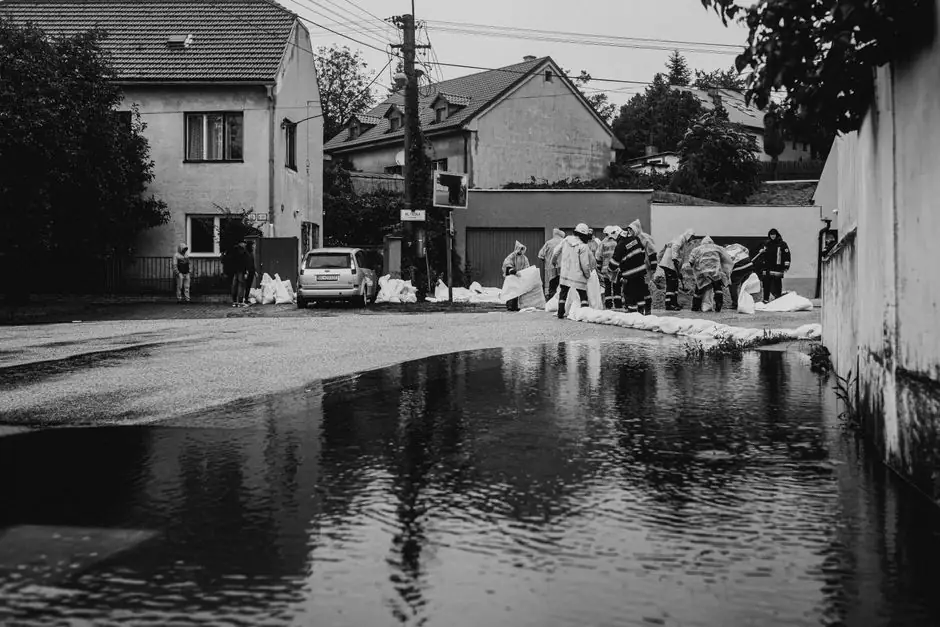
- Storm flooding from outside: if water is coming in from rain or runoff, there's no valve to close — sandbags at doors and moving items to higher ground is your best play.
Step 3: Document Everything Before You Touch It
Photograph and video the damage BEFORE you start cleaning or moving things. Insurance adjusters want to see the full extent of what happened: standing water levels against walls, soaked furniture and belongings, wet drywall, swollen flooring. Open closets and photograph inside. Capture wide shots of each room plus close-ups of damage. This documentation protects you twice — for your claim and as a record if damage worsens after drying reveals more.
Important: do not throw anything away until you've documented it and checked with your insurer. Damaged items can be part of the claim, and disposing of them early gives the adjuster a reason to deny replacement costs.
Step 4: Protect What You Can
Once you've documented, move dry valuables, electronics, important papers, and photographs to a dry part of the house. Lift furniture onto blocks or foil-wrapped feet if you can't move it out. Pull rugs and cushions from wet flooring. For carpet, pulling it up from tack strips is a job best done carefully — but in an emergency, getting it off the pad and propped for airflow beats leaving it to soak.
Step 5: Start Basic Extraction — Know Your Limits
Mop, towel, and bucket what you can. If you have a wet/dry shop vacuum, it can pull water from hard floors and the surface of carpet. But recognize the limits: a household wet-vac cannot dry wall cavities, subflooring, or insulation — and that's where the real damage lives. After surface extraction, run fans and a dehumidifier if you have them. This is also the moment to call a professional — because what happens next determines whether this ends well.
The 24–48 Hour Mold Window
Mold begins growing on damp drywall, wood, and carpet within 24 to 48 hours. Professional drying uses commercial air movers, dehumidifiers, and moisture meters to pull water out of materials — not just off surfaces. If moisture stays trapped in walls or under floors, mold follows, and then you're dealing with mold removal on top of water damage. Proper water mitigation is about getting materials verifiably dry, fast — before the mold clock runs out.
What NOT to Do
- Don't use a household vacuum on standing water. Standard vacuums and standing water are an electrocution risk; only a wet/dry shop vac, used correctly, is safe.
- Don't crank the heat to "dry things faster." Heat alone drives moisture deeper into materials and raises humidity, which feeds mold — drying is about airflow plus dehumidification, not temperature.
- Don't wait to see if it "dries on its own." Surfaces dry; wall cavities don't. Every day of waiting is a day closer to mold, rot, and a much bigger bill.
- Don't enter flooded areas with power still on. Water and electricity are a lethal combination. No shortcut is worth it.
- Don't file your insurance claim without documentation. Photos and a professional scope of work make claims far smoother — see our point above about storm and flood cleanup documentation.
When It's Beyond DIY
Call a professional immediately if: water came from a sewage source, flooding covered more than one room, water entered wall cavities or the subfloor, you smell mustiness (mold may already be starting), or the damage involves your electrical system. A professional crew brings commercial extraction, industrial dehumidifiers, and moisture verification — the equipment and process that turn a flood into a footnote instead of a disaster. Our emergency water removal team in Cheyenne handles exactly this, day and night.
Water Damage FAQs — Cheyenne, WY
Should I call a professional or handle water damage myself?
Surface water in one small area with a known, stopped source is often manageable. Call a professional when: the source is unknown or still flowing, water spread through multiple rooms or into walls/floors, sewage is involved, or it has been more than a day — because by then hidden moisture and mold become the real problem.
What does a water damage restoration company actually do?
The full process is: assess the damage and find all moisture with meters, extract standing water, place air movers and dehumidifiers to dry the structure, monitor until materials verify dry, remove unsalvageable materials, clean and sanitize, and restore damaged drywall, flooring, and finishes. We also handle related issues like mold and odors.
Will my insurance cover the damage?
Sudden and accidental damage — burst pipes, appliance failures, storm-driven flooding — is typically covered by homeowners policies. Gradual damage from long-term leaks usually is not. Thorough documentation (photos, moisture readings, a written scope) makes claims much smoother. We provide exactly that documentation with our jobs.
How quickly does mold grow after water damage?
Mold can begin growing on damp organic materials within 24 to 48 hours. Fast, complete drying is the best prevention — and if mold has already started, it needs professional containment and removal, not bleach and hope.
Dealing With Water Damage Right Now?
Don't wait and hope it dries. Call our Cheyenne team — 24/7 emergency response.
📞 (307) 677-9165