Emergency Water Removal in Cheyenne, WY
Standing water in your home or business? Our Cheyenne crew responds 24/7 with commercial extraction equipment to get water out fast — before it spreads into walls, floors, and framing.
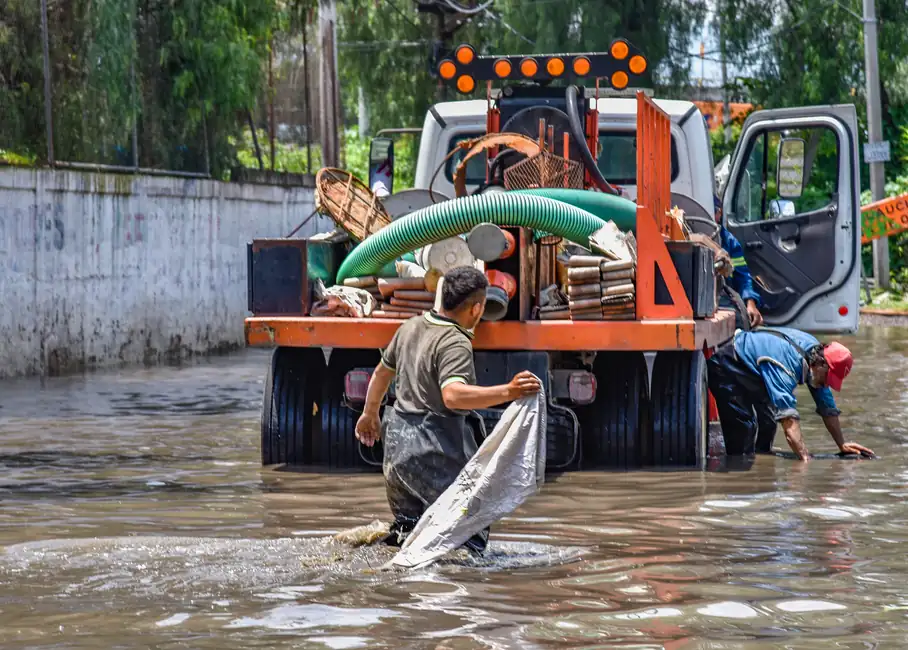
Fast answer: Emergency water removal is the immediate extraction of standing water from your property using commercial pumps and truck-mounted vacuums. In Cheyenne, our team responds 24/7 — because every hour water sits, it soaks deeper into drywall, subflooring, and framing. Call (307) 677-9165 the moment you find standing water.
Removal, mitigation or cleanup? Water removal is the first step: extracting standing water. Once it is out, water mitigation dries the structure and stops hidden damage. For storm or snowmelt flooding see flood cleanup; for water below grade see basement water removal.
What Emergency Water Removal Involves
Water removal is the first and most time-critical phase of any water damage job. It means physically getting liquid water out of the building — from puddles on a slab floor to inches of water across a finished basement — using equipment far more powerful than anything available to a homeowner.
Our crew arrives with submersible pumps for deep standing water, truck-mounted extraction units for carpeted areas, and portable wet vacuums for tight spaces. We also pull water from areas you cannot see: under baseboards, beneath floating floors, and inside saturated carpet padding. For hardwood specifically, see whether your water-damaged hardwood floors can be saved before deciding on replacement.
- Submersible pumps for basements, crawl spaces, and large volumes of standing water.
- Truck-mounted extraction for carpet, rugs, and upholstery — pulling water out of fibers, not just off the surface.
- Portable extraction wands for stairs, closets, and confined areas.
- Moisture mapping right away, so we know where water traveled even where you cannot see it.
Why Speed Matters More Than Anything Else
Water is not static — it migrates. Within minutes it wicks up drywall; within hours it swells door frames and buckles wood flooring; within a day or two it can begin growing mold on damp drywall and wood. Fast extraction shortens every stage of the job that follows: less drying time, less demolition, less secondary damage.
Cheyenne's climate adds its own urgency. In winter, a burst pipe can flood a home while the owners are at work — and freezing temperatures in an unheated space can turn standing water into ice that splits flooring and cracks fixtures. In summer, rapid snowmelt and sudden storms can overwhelm sump pumps. Either way, the rule is the same: get the water out now, and figure out the rest second.
Common Water Removal Situations We Handle
- Burst or frozen pipes — the single most common cause of sudden indoor flooding in Cheyenne winters.
- Water heater failures — a ruptured tank can release 40–50 gallons across a utility room and beyond.
- Appliance supply-line breaks — washing machine hoses, dishwasher lines, and refrigerator ice-maker lines.
- Basement flooding — sump-pump failure, foundation seepage, or rapid snowmelt around the foundation.
- Storm-driven flooding — water entering through damaged roofs, windows, or overwhelmed drainage.
- Sewage backups — contaminated water that requires specialized handling (see our sewage cleanup service).
Our Water Removal Process
Emergency call and dispatch
Call (307) 677-9165 any time. We confirm your location, what happened, and whether the water source is stopped — then dispatch a crew.
Source control and safety check
We make sure the water is stopped and the area is safe — checking for electrical hazards before anyone wades in.
Standing water extraction
Pumps and extraction units remove all visible standing water, room by room.
Moisture mapping
Meters locate hidden moisture in walls, flooring, and cavities so nothing is missed.
Handoff to drying
Once bulk water is out, the job moves into water mitigation — structural drying and monitoring until everything is verified dry.
Local Water Removal Service for Cheyenne Homes
Cheyenne homes face two distinct water-removal seasons. From November through March, freeze-related bursts are the dominant cause — pipes in exterior walls and unheated spaces give way during cold snaps, often discovered as a flooded hallway or basement after work. From late spring into summer, rapid snowmelt and heavy rain test sump pumps and foundation drainage, especially in lower-lying areas and older neighborhoods.
Because our team is based right here in Cheyenne, we reach homes across ZIP codes 82001, 82002, 82003, 82007, 82009 quickly — and we arrive equipped for both seasons. If you need full water damage restoration in Cheyenne, water removal is where it starts, and we are ready around the clock.
Cost Considerations
No two extractions cost the same, and any honest company will tell you that. What drives the scope: how much water there is, how far it traveled, what materials it soaked (carpet and pad are cheaper to handle than hardwood or plaster), and whether contaminated water requires sanitary protocols. A small contained spill in one room is a very different job from a burst pipe that flooded three rooms and a finished basement. We assess on site, explain the work in plain terms, and document everything so you can discuss it with your insurance company.
When to Call a Professional
Call immediately — do not wait to see if it dries on its own — when:
- Standing water is more than a small puddle you can mop up in minutes.
- Water has reached carpet, drywall, cabinets, or wood flooring.
- The water may be contaminated (sewage smell, discoloration, or from a drain backup).
- Water is near electrical outlets, your breaker panel, or appliances — shut power off first if it is safe, then call.
- You are unsure where the water is coming from — our moisture mapping finds it.
Water Removal FAQs
How quickly should water be removed after a flood or burst pipe?
Immediately. Water migrates into porous materials within minutes and can start mold growth within 24 to 48 hours. The faster extraction begins, the less demolition and drying the job needs — and the lower the chance of secondary damage like mold or warped flooring.
Can I just use my shop vacuum and fans instead of professional extraction?
A shop vacuum helps with a small spill, but it cannot pull water out of carpet padding, wall cavities, or subflooring, and household fans do not dehumidify. Professional extraction equipment and structural drying are what prevent the hidden moisture that causes mold weeks later.
Do you remove water from basements and crawl spaces?
Yes. Basements are one of the most common places we extract water — from sump-pump failures, foundation seepage, and burst pipes. Crawl spaces are handled too, with attention to vapor barriers and ventilation so the space dries properly.
What happens after the water is removed?
Extraction is phase one. Next comes water mitigation — drying the structure with commercial air movers and dehumidifiers, monitoring moisture until materials reach dry standards, then cleaning, sanitizing, and restoring damaged areas.
Is the water removal service really available 24/7?
Yes. Water emergencies do not keep business hours, so our Cheyenne line is answered around the clock. Call (307) 677-9165 any time — nights, weekends, and holidays included.
Helpful Guides
Related Services
Water Mitigation
Structural drying and monitoring after extraction.
Flood Cleanup
Cleanup after storms, snowmelt, and creek flooding.
Frozen & Burst Pipes
Cheyenne winter freeze protection and response.
Call Now — 24/7 Emergency Service
Water damage does not wait — and neither do we. Call now and talk to our Cheyenne team about your situation.
📞 (307) 677-9165